
AI APIs
Decisions API vs Jev: Differences & Integration Guide
Compare Decisions API vs Jev: platform and model differences, typed outputs, API integration, cost evaluation, and a practical checklist for choosing your stack.
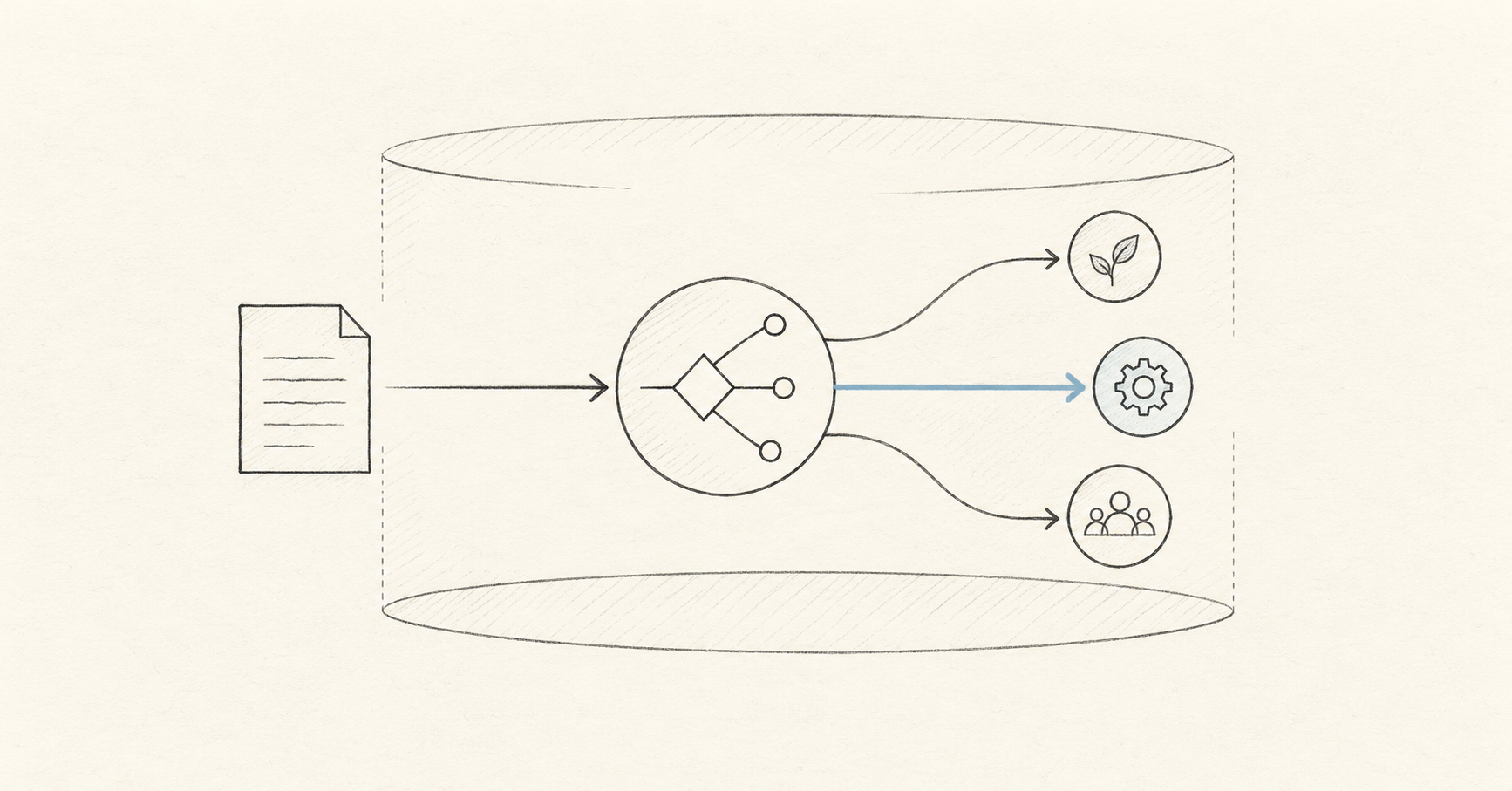
Decisions API vs Jev is primarily a platform-versus-model comparison. On DecisionApi.net, Decisions API is an independent service for accessing and comparing decision models. Jev is a model developed by TypeSafe. You can select Jev through the service when your account has access, so the two can belong to the same application stack.
For a developer, the useful question is therefore twofold: which model handles your task well, and which access route makes that model practical to operate? This guide separates those choices, walks through a support-routing example, and explains how to compare quality, cost, uncertainty, and integration effort.
Scope, checked October 3, 2026: This article compares this site's service with Jev. It does not treat the service as an OpenAI product. The dedicated comparison page makes the same distinction. We did not verify a dedicated OpenAI Decisions API contract in the official documentation reviewed; that is a verification limit, not proof that a product is unavailable.
Table of contents
- Decisions API vs Jev at a glance
- What a decision model contributes
- Choose the output your application needs
- Integration example using Jev through Decisions API
- Evaluate quality before choosing a provider
- Compare cost and latency fairly
- Keep application policy in charge
- Plan a migration without changing business behavior
- Which setup should you choose
- Frequently asked questions
Decisions API vs Jev at a glance
A model evaluates the evidence and question. An API service provides the surrounding access contract: where requests go, which credentials they require, how usage is recorded, and which models an account can call. Confusing those layers produces misleading comparisons, such as asking whether a platform is more accurate than one of the models available through it.
| Dimension | Decisions API on this site | Jev |
|---|---|---|
| Role | Service and playground for supported decision models | TypeSafe decision model family |
| What you select | Access route and available model | Model version for a bounded task |
| Integration responsibility | Service endpoint, credentials, response handling | Questions, criteria, and model behavior |
| Billing to check | This service's usage and credit terms | Terms of whichever provider serves Jev |
| Main evaluation | Workflow fit and operational overhead | Decision quality on your examples |
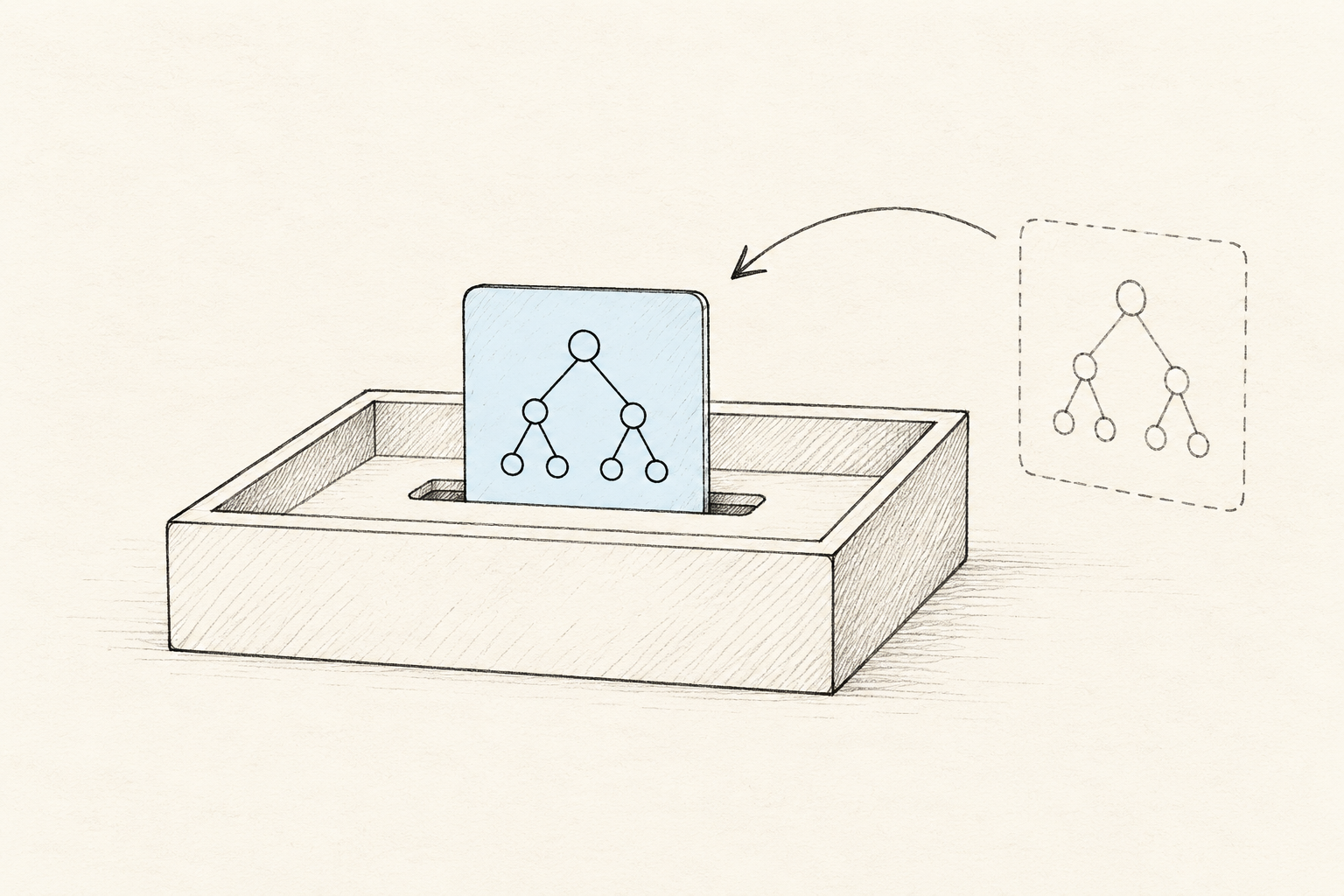
Separate your experiment accordingly. First compare candidate models through one access route where possible. Then compare access routes using the same model version, questions, and inputs. Otherwise, a change in model quality can be mistaken for a benefit of the platform, or a network difference can be mistaken for a faster model.
Do not assume that a familiar model name means identical configuration everywhere. Record the identifier returned by the provider, not only a display label. Aliases that track a latest version can change the behavior of a previously successful workflow.
What a decision model contributes
TypeSafe introduces Jev as a System One model for making decisions over a supplied context. Its official introduction to Jev is the primary source for that positioning. For application design, the key distinction is the output boundary: you define a decision space, then consume a result within that space.
Consider a customer message about a duplicate charge. Your application may need a team label, an urgency level, and an escalation signal. It does not necessarily need a paragraph explaining the entire complaint. A bounded interface gives downstream code a small set of outcomes to handle.
That benefit has limits. A valid label can still be the wrong label. A probability can be poorly matched to real outcomes. A well-formed response cannot establish that a customer owns an account. Treat output structure, semantic correctness, and authorization as separate concerns.
This also explains why the best workflow may combine approaches. Use a decision stage to choose an approved route, a retrieval stage to obtain records, and a generative model to draft a response when prose is actually needed. Evaluate each stage against its own purpose.
Choose the output your application needs
Jev-style workflows use Choice, Score, and Noul questions. Pick the shape by the action that consumes it, rather than using one question type for every task. The TypeSafe quickstart provides the provider's integration starting point.

Choice for routing and classification
Use a choice when exactly one allowed category should emerge. For support routing, define billing, technical, and manual_review, each with a concrete description. Explain whether a payment-related software defect belongs to billing or technical support; an ambiguous rubric creates ambiguous labels.
Include a route for incomplete or unfamiliar cases. If a message contains several issues, specify whether to select the primary issue or send it for review. Do not force a single-label problem onto a workflow that actually needs multiple independent decisions.
Score for an ordered rubric
Use a score when the categories have an order, such as routine, time-sensitive, blocked, and critical. Write observable criteria for each level. “Critical means an active service outage” is easier to evaluate than “critical means very important.”
A score is only meaningful relative to its rubric. Do not assume that a threshold calibrated for one model transfers to another, or that a risk score can be interpreted as a probability of loss.
Noul for a focused yes-or-no signal
Use a yes-or-no question for one proposition, such as whether a ticket explicitly reports a duplicate charge. In this workflow, Noul exposes a probability signal rather than a universal business rule.
Define how to handle uncertainty separately. A model's affirmative signal may justify retrieving a payment record; it should not, by itself, authorize a refund. Several questions sharing the same input also should not be treated as a sequential reasoning chain unless the provider explicitly supports that behavior.
Integration example using Jev through Decisions API
The following request uses this site's endpoint and credentials, with Jev selected as the model. It is not a direct TypeSafe request or an OpenAI request. Check the service API documentation for the current contract and account requirements before running it.
curl --fail-with-body --max-time 20 \
  'https://decisionapi.net/v1/systemone' \
  -H "Authorization: Bearer ${DECISIONS_API_KEY}" \
  -H 'Content-Type: application/json' \
  --data '{
    "model": "typesafe/jev-1.13",
    "state": "A customer reports two charges for one order and asks for help.",
    "questions": {
      "route": {
        "type": "choice",
        "instructions": "Choose the team that should investigate this message.",
        "criteria": {
          "billing": "Charges, invoices, or payment questions",
          "technical": "Software failures unrelated to billing",
          "manual_review": "Missing context or no clear matching team"
        }
      },
      "duplicate_charge_claim": {
        "type": "noul",
        "instructions": "Does the customer explicitly report being charged twice?"
      }
    }
  }'
Set DECISIONS_API_KEY in your server environment using a key issued by this service. The request can incur usage charges. The timeout is an example client setting, not a claim about expected latency. The model identifier appears in the site's example; verify availability for your account.
Notice the wording: the second question identifies a claim, not a verified billing event. Your backend must consult transaction records before deciding whether a duplicate charge occurred. This small distinction prevents a classification result from silently becoming a financial fact.
For the response, validate the documented structure and allowlisted values before routing. Handle authentication failures, exhausted credits, timeouts, and missing fields explicitly. Avoid unlimited retries, and keep any later side effect idempotent so a retried evaluation cannot create duplicate actions.
Evaluate quality before choosing a provider
A useful comparison starts with a labeled dataset and a written failure policy. The following is a suggested evaluation procedure, not a published benchmark or a claim about either product's performance.

Build a dataset that exposes the difficult cases
Sample sanitized examples from the actual workflow. Include ordinary requests, overlapping categories, missing context, unsupported requests, and relevant languages. Deduplicate near-identical cases before splitting development and evaluation sets; otherwise repeated tickets can make results look stronger than they are.
Have a person label the expected route and flag disagreements in the rubric. Preserve a held-out set while refining question wording. If you repeatedly adjust prompts against the same examples, you are measuring familiarity with that set rather than performance on new inputs.
Measure consequences, not only overall accuracy
| Measurement | Why it matters |
|---|---|
| Accuracy by category | Reveals a weak route hidden by a common easy category |
| False positives and false negatives | Separates unnecessary escalation from missed escalation |
| Review rate | Shows how much work remains with people |
| Error rate among automated cases | Measures the subset allowed to affect the workflow |
| Probability calibration | Checks whether predicted probabilities match observed frequencies |
| Results by language and input length | Exposes performance differences across your traffic |
Report counts alongside percentages. A model that handles eight examples perfectly provides weaker evidence than a model evaluated on a substantial, representative sample. There is no universal minimum dataset size; the required evidence depends on rare-case frequency and the consequences of mistakes.
Tune thresholds on separate data
As an illustrative policy, a team might automatically route a case only above a selected confidence threshold and send the rest to review. Choose that threshold using validation data, then measure it on untouched examples.
Do not transfer a numeric cutoff simply because two providers return values between zero and one. Compare automation coverage at an acceptable error rate. A model that defers more often may be preferable when incorrect automatic actions are expensive.
Compare cost and latency fairly
Keep the request contents, model version, concurrency, and client region consistent when comparing access routes. Record end-to-end latency from your application, including retries and failures. Median latency describes a typical request; a high percentile such as p95 exposes the slower tail that users also experience.
For cost, use a common workload and include the operational consequences:
effective cost per accepted decision =
  (API charges + retry charges + review cost + correction cost)
  / number of decisions meeting the workflow's acceptance criteria
This is an accounting framework, not a product pricing formula. Define “accepted” before the experiment and use the same definition across candidates. A low API bill may be offset by frequent review; an expensive route may still fail to justify itself if quality is unchanged.
Check the current model catalog before selecting candidates. Confirm the exact model, question support, and usage terms available to your account. Platform credits, direct provider charges, and another company's subscription are separate arrangements; do not infer one from another.
Also measure engineering overhead. Error handling, billing reconciliation, support escalation, and model upgrades all require time. Estimate those costs explicitly rather than assuming either a multi-model service or a direct integration always minimizes them.
Keep application policy in charge

A decision result should enter a policy check before it triggers a consequential action. In the support example, the model proposes a queue. Your application confirms that the queue exists, that the request belongs to the current tenant, and that the operation is permitted.
Keep these responsibilities explicit:
- Validate the response type and reject unknown labels.
- Fetch authoritative records for claims that require verification.
- Apply permission checks independently of the model's answer.
- Route unavailable or ambiguous results to a defined fallback.
- Log model version, rubric version, request identifier, and final action.
Treat customer text as evidence rather than trusted instructions. Include adversarial examples in evaluation, such as a ticket that tells the model to ignore its routing criteria. Typed output narrows the answer space, but it does not establish immunity to misleading input.
Data handling also belongs in the access-route comparison. Verify retention, processing locations, downstream providers, and contractual requirements for the actual service you use. Sending the same model a request through a different provider can change the data path even when the model identifier looks familiar.
Plan a migration without changing business behavior
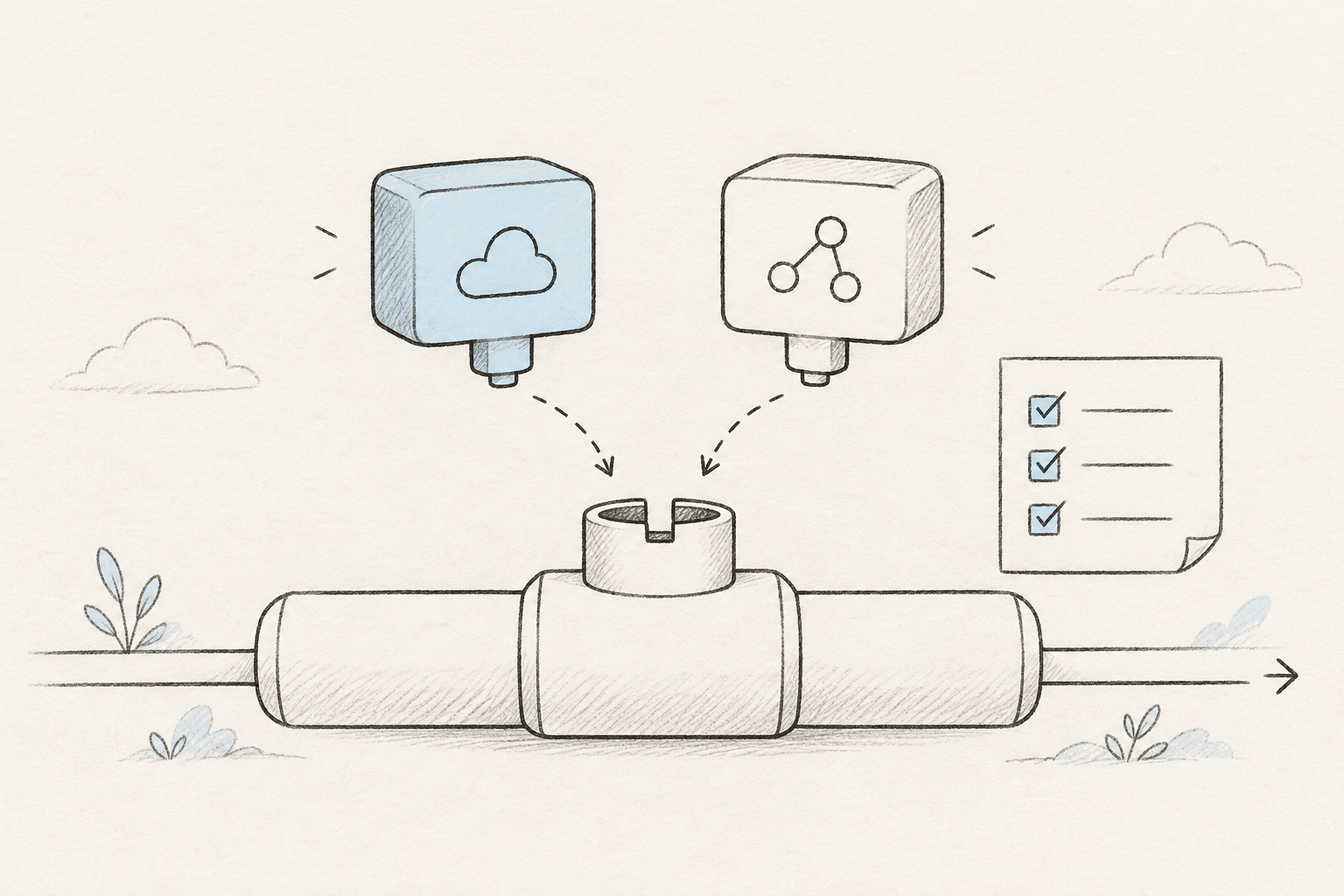
If you later move between an intermediary service and direct provider access, preserve the business decision before changing the transport. The TypeSafe API reference is the place to verify its own contract; matching terminology is not a compatibility guarantee.
- Freeze the application contract. Write down allowed routes, score meanings, fallback behavior, and which outcomes require review.
- Map provider differences. Check authentication, model identifiers, request fields, response fields, errors, and usage units against each provider's documentation.
- Replay the evaluation set. Record disagreements instead of assuming that shared question names imply identical decisions.
- Recalibrate the policy. Recheck thresholds and review coverage whenever the model, provider behavior, or rubric changes.
- Roll out gradually. Start with observation-only calls, then limited traffic, while retaining a tested rollback path.
During observation-only testing, continue using the existing system's decision and compare the new result in logs. Prevent the second path from sending emails, changing records, or issuing refunds. This makes differences measurable without doubling the workflow's actions.
Keep the adapter small. You usually need a clear mapping at the service boundary, not a speculative framework for every future provider. Add abstractions only when a second real integration shows which differences recur.
Which setup should you choose
Choose a multi-model service when comparing available models and managing one integration matches your needs. Consider direct TypeSafe access when your evaluation already favors Jev and the provider's access, operational, and contractual terms suit your workload. Neither route is automatically faster, cheaper, or more accurate.
If the task is an exact rule over trusted fields, implement that rule directly. If the task requires open-ended writing, plan a generative stage. Use a decision model where interpreting context into bounded choices is the part that needs evaluation.
Start with one low-consequence workflow in the Decisions API playground. Define the labels, test clear and difficult inputs, inspect usage, and establish a review policy before connecting results to production actions. A useful selection report names the model, access route, dataset, acceptance rule, and observed tradeoffs.
Frequently asked questions
Is Jev a competitor to Decisions API?
They occupy different layers in the comparison covered here. Jev is a model; this site's Decisions API is a service through which supported models can be used. Direct TypeSafe access and service-mediated access are the more relevant integration alternatives.
Can I use the same API key everywhere?
Do not assume so. Use credentials issued for the endpoint you call, and confirm billing separately. A shared request shape does not make keys or balances interchangeable.
Does structured output guarantee a correct answer?
No. Structural validity means the result fits an expected format. Correctness depends on evidence, criteria, model behavior, and the task. Evaluate both before automating decisions.
Which option is faster or cheaper?
There is no defensible universal winner without a controlled workload. Compare the same model version where possible, include failures and retries, and account for review effort alongside API charges.
What about OpenAI Decisions API vs Jev?
Treat that as a separate product comparison. The official OpenAI API documentation is the source to check for an OpenAI contract. Our review did not establish a dedicated Decisions API endpoint, schema, price, or access policy as of October 3, 2026. This site's keys and credits should not be represented as OpenAI access.